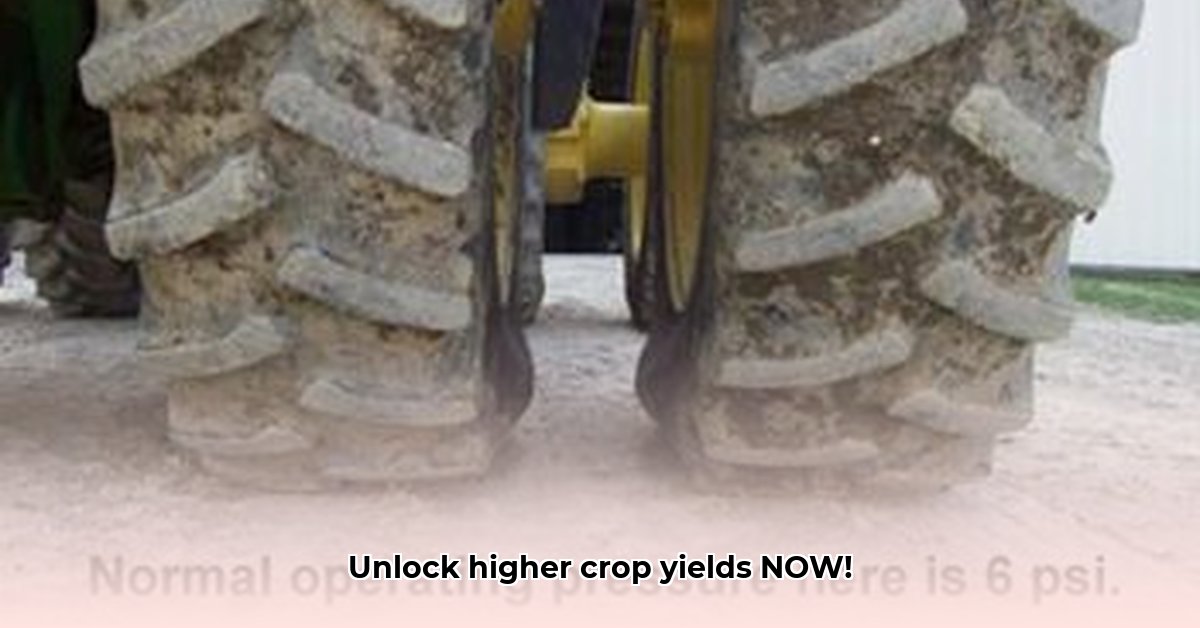
Finding the Perfect Tire Pressure for Your Tractor
Proper tractor tire pressure is crucial for maximizing yields, minimizing fuel consumption, and protecting soil health. Finding the optimal pressure isn't about a single number; it's about understanding the interplay between your load, speed, soil type, and tire specifications. Ignoring this can lead to significant losses in efficiency and profitability. What are you waiting for? For more detailed information, check out this helpful resource on tractor tire pressure.
Step-by-Step Pressure Optimization
Follow these steps to achieve optimal tractor tire pressure:
Check the Sidewall: Every tire has a maximum pressure rating printed on the sidewall. This is your absolute upper limit – never exceed it.
Consult Your Owner's Manual: Your tractor's manual provides recommended pressure ranges for different operating conditions, loads, and soil types. This is your primary starting point.
Invest in a Reliable Pressure Gauge: An accurate gauge is essential for precise measurements. A poorly calibrated gauge will lead to inaccurate readings.
Regular Monitoring is Key: Make regular pressure checks a routine part of your farm maintenance. Monthly checks are a good starting point, but more frequent checks may be necessary depending on your operating conditions and soil type. Think of it as preventative maintenance – it will save you money in the long run.
Consider Soil Conditions: Soil type heavily influences ideal tire pressure. Softer soils (clay, for example) require lower pressure to avoid compaction, while firmer soils (sand) can tolerate higher pressure.
Utilize Online Calculators: Several online calculators, such as the Michelin Agropressure calculator, can assist in determining ideal tire pressure based on your specific tractor specifications, load, and soil type.
Adjust for Load: Heavier loads naturally require higher tire pressure for adequate support and stability.
Understanding the Impact of Incorrect Tire Pressure
Incorrect tire pressure directly impacts your farm's efficiency and profitability. Let's explore the consequences:
Fuel Waste: Under-inflated tires significantly increase rolling resistance, forcing your tractor to work harder and consume more fuel. This translates directly to reduced profitability. Did you know that underinflation can increase fuel consumption by up to 20%?
Soil Compaction: Both over- and under-inflation contribute to soil compaction. Over-inflation reduces the tire's contact area with the soil, increasing pressure on a smaller area and compacting it. Under-inflation causes the tire to sink into the soil, leading to compaction as well. This reduces drainage, aeration, and root growth.
Reduced Yields: Compacted soil negatively impacts plant growth, resulting in significantly reduced crop yields. Healthy soil is the foundation for a bountiful harvest. Are you maximizing your soil's potential?
Premature Tire Wear: Incorrect tire inflation stresses and weakens tire structure; leading to premature wear and costly replacements.
Advanced Techniques for Tire Pressure Management
For farmers seeking to optimize efficiency, advanced techniques offer significant advantages:
Central Tire Inflation Systems (CTIS): CTIS allows for on-the-go adjustment of tire pressure, enabling optimization for varying field conditions and tasks. This ensures ideal pressure regardless of whether you’re operating on hard or soft terrain.
Precision Farming Technology: Precision farming utilizes advanced sensors and data analytics to provide real-time feedback on various aspects of your farm operations, including tire pressure. This data-driven approach enhances efficiency and precision in tire pressure management.
Ballasting: Adding weight to your tractor (ballasting) improves traction. Combined with proper tire inflation, ballasting enhances soil protection and ensures even weight distribution across the tires.
Minimizing Risks and Maximizing Returns
Proactive tire management is crucial for preventing costly issues. Here's how to ensure long-term success:
Implement a Regular Maintenance Schedule: Regularly check and adjust tire pressure according to your established schedule.
Invest in Quality Equipment: Invest in high-quality pressure gauges and ensure they are properly calibrated for accurate readings.
Monitor Tire Condition: Regularly inspect tires for cuts, bulges, or other signs of damage, addressing any issues promptly.
Keep Detailed Records: Maintain a log of tire pressure checks, maintenance, and any issues encountered. This documentation is crucial for monitoring trends and maximizing the lifespan of your tires.
Consider a Tire Pressure Monitoring System (TPMS): A TPMS provides continuous monitoring of tire pressure, alerting you to any significant changes that require immediate attention.
By implementing these strategies, you'll not only protect your investment but also improve your farm's overall efficiency, sustainability, and profitability. Remember, proper tire pressure is a critical aspect of sustainable farming practices.